


MELD FastSurfer and FreeSurfer are intended solely for non-clinical research use and are separate from and not associated with Persyst’s regulated medical device products.
Now available for download: one-click Windows installers for two open-source brain MRI analysis pipelines — FastSurfer and MELD, both of which bring FreeSurfer with them.
Both are free, both are for research use, and both can be running on an ordinary Windows PC in about half an hour.
MELD Graph — focal cortical dysplasia detection
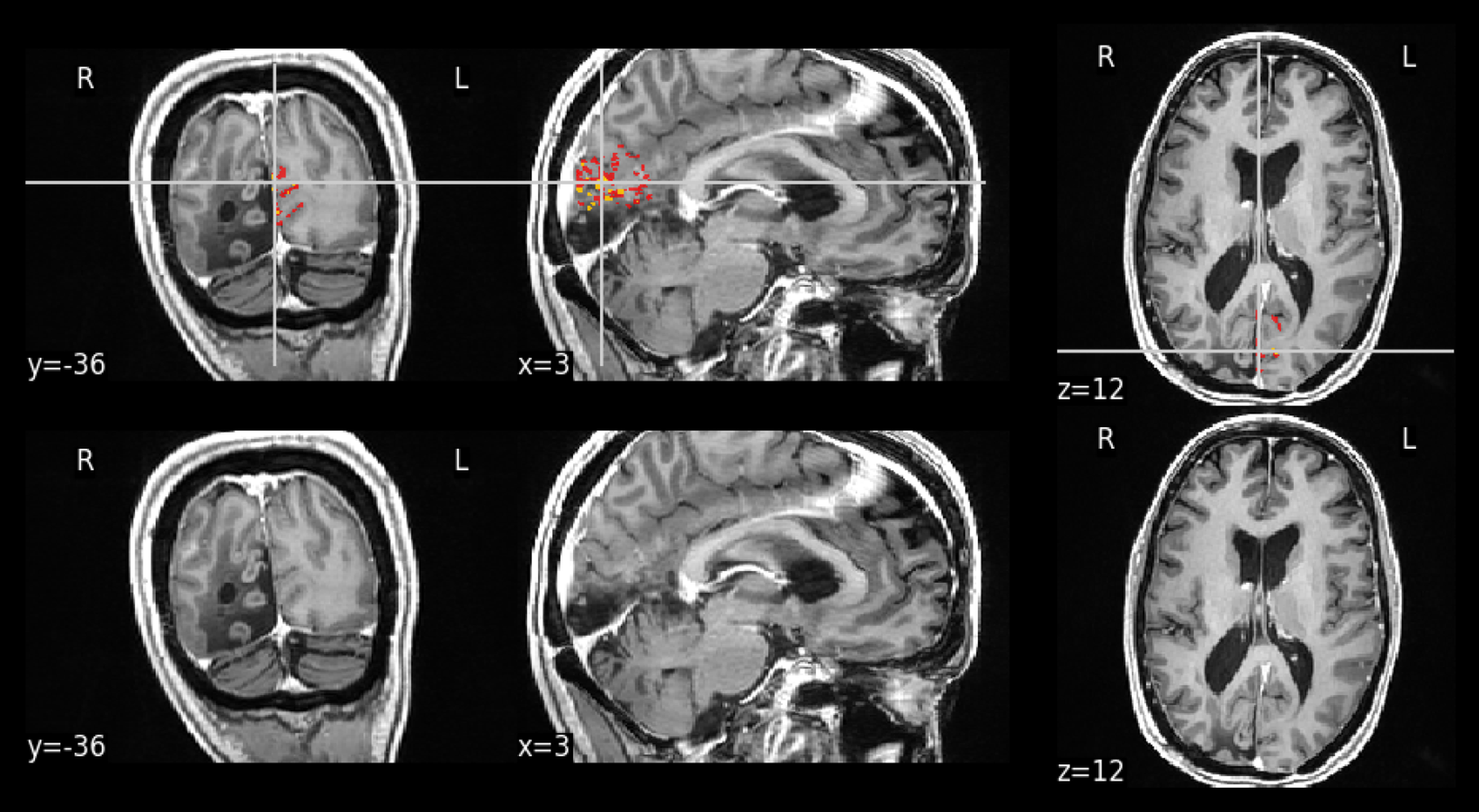
MELD Graph processes a T1 and FLAIR scan pair and highlights regions of cortex that resemble a focal cortical dysplasia, a common and frequently MRI-subtle cause of focal epilepsy. It reconstructs the cortical surface, extracts imaging features across the brain, applies a trained graph neural network, and produces a PDF report showing candidate lesional regions. Works with 1.5T or 3T data. A full run takes a few hours per subject.
MELD also supports a one-time scanner harmonisation step that calibrates the model to the local scanner and protocol, strongly recommended before routine use.
Installs the commands meld-lesion and meld-harmonize.
Licensing. MELD needs two free license files: a FreeSurfer license (request a FreeSurfer license) and a MELD license, issued automatically once you complete the MELD Graph registration form.
FastSurfer — segmentation and morphometry
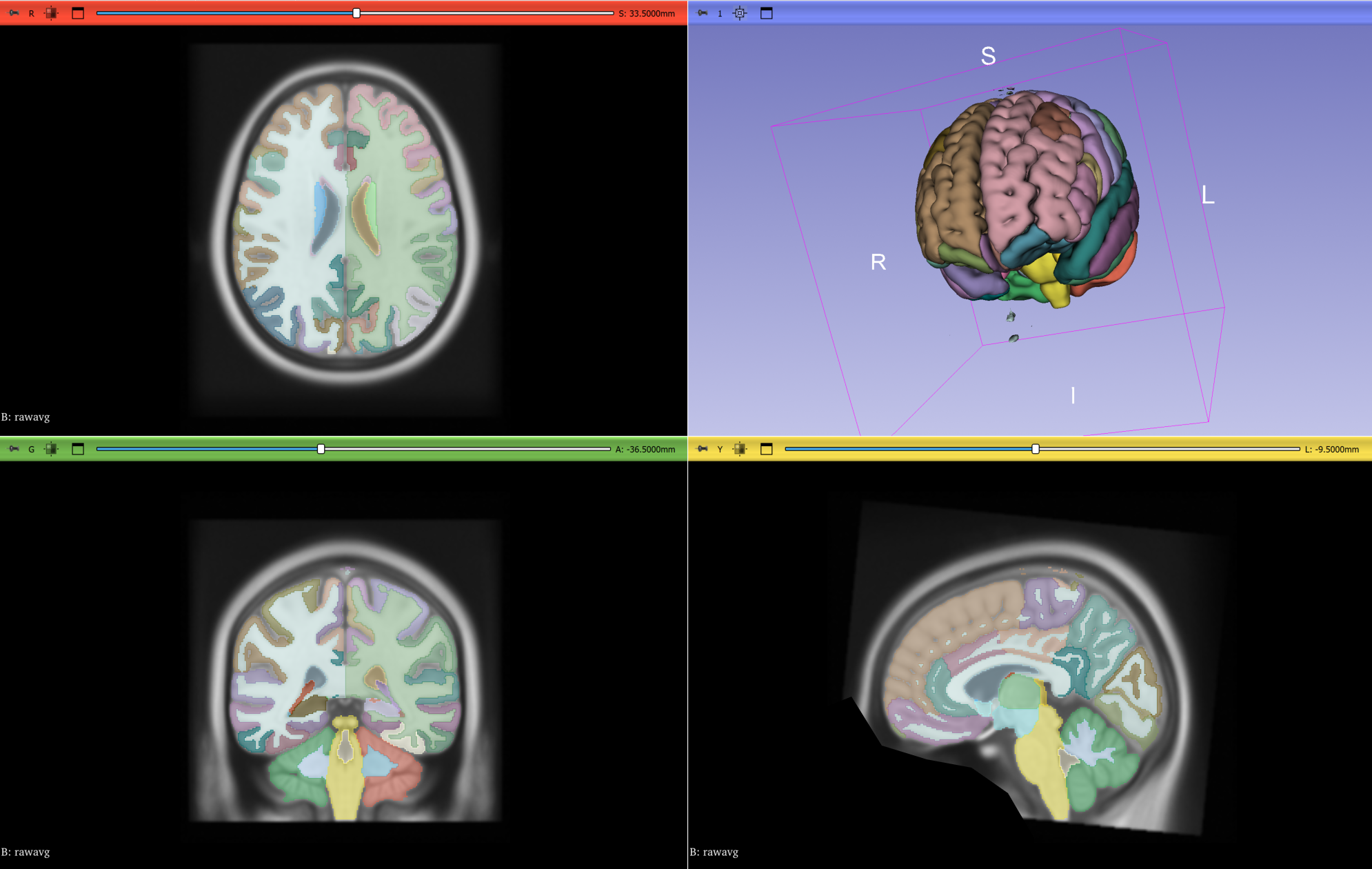
FastSurfer performs deep-learning segmentation of brain anatomy from a T1 scan. In full-pipeline mode it also reconstructs the cortical surface and produces parcellation and cortical thickness measurements comparable to a standard FreeSurfer run, in a fraction of the time. Segmentation-only mode finishes in a few minutes and needs no license at all. The full pipeline takes roughly 20–60 minutes per subject depending on hardware.
Installs the command fastsurfer.
Licensing. Segmentation-only runs need no license of any kind. The full pipeline calls FreeSurfer binaries internally, so it does need a FreeSurfer license file — free, and emailed to you after a short form: request a FreeSurfer license.
FreeSurfer — included, no separate download
There is no separate FreeSurfer download on this page, because both installers already include it. FastSurfer’s full pipeline runs FreeSurfer binaries for surface reconstruction, and MELD’s container carries its own FreeSurfer 7.2. For FreeSurfer, install FastSurfer and run the full pipeline.
Licensing. FreeSurfer is free but licensed per user. Registration is a short form and the license.txt file arrives by email; save it and point the installer at it when asked: request a FreeSurfer license.
The two answer different questions. FastSurfer asks what is this anatomy and how large is it? MELD asks is there a lesion here? They are independent — install either alone, or both.
They share a foundation. MELD’s container carries its own FreeSurfer 7.2 and FastSurfer 1.1.2 to reconstruct the cortical surface — that is why it needs a FreeSurfer license, and it is why MELD runs identically whether or not you install FastSurfer. The FastSurfer download here is a current, standalone build for morphometry in its own right.
Linux-only tools, running on Windows
These pipelines are open source, well validated, and built for Linux. Getting one running on Windows has traditionally meant a long detour: enable virtualisation, install and configure WSL2, set up Docker inside it, find the right container image, wire up volume mounts so the container can see your data, translate Windows paths into Linux paths, put license files where the software expects them, and then type a shell command with a dozen arguments every time you want to process a subject. Add GPU passthrough and the list grows.
None of that is research. It is pure setup standing between a researcher and the tool they wanted, and it has to be repeated on every workstation.
These installers remove that detour. They configure the whole environment for you and reduce each pipeline to a single command you can type at a normal Windows prompt.
Persyst supplies the installers and the wrapper commands. No Persyst software is installed and no Persyst servers are contacted at install time or at run time.

What the installers do
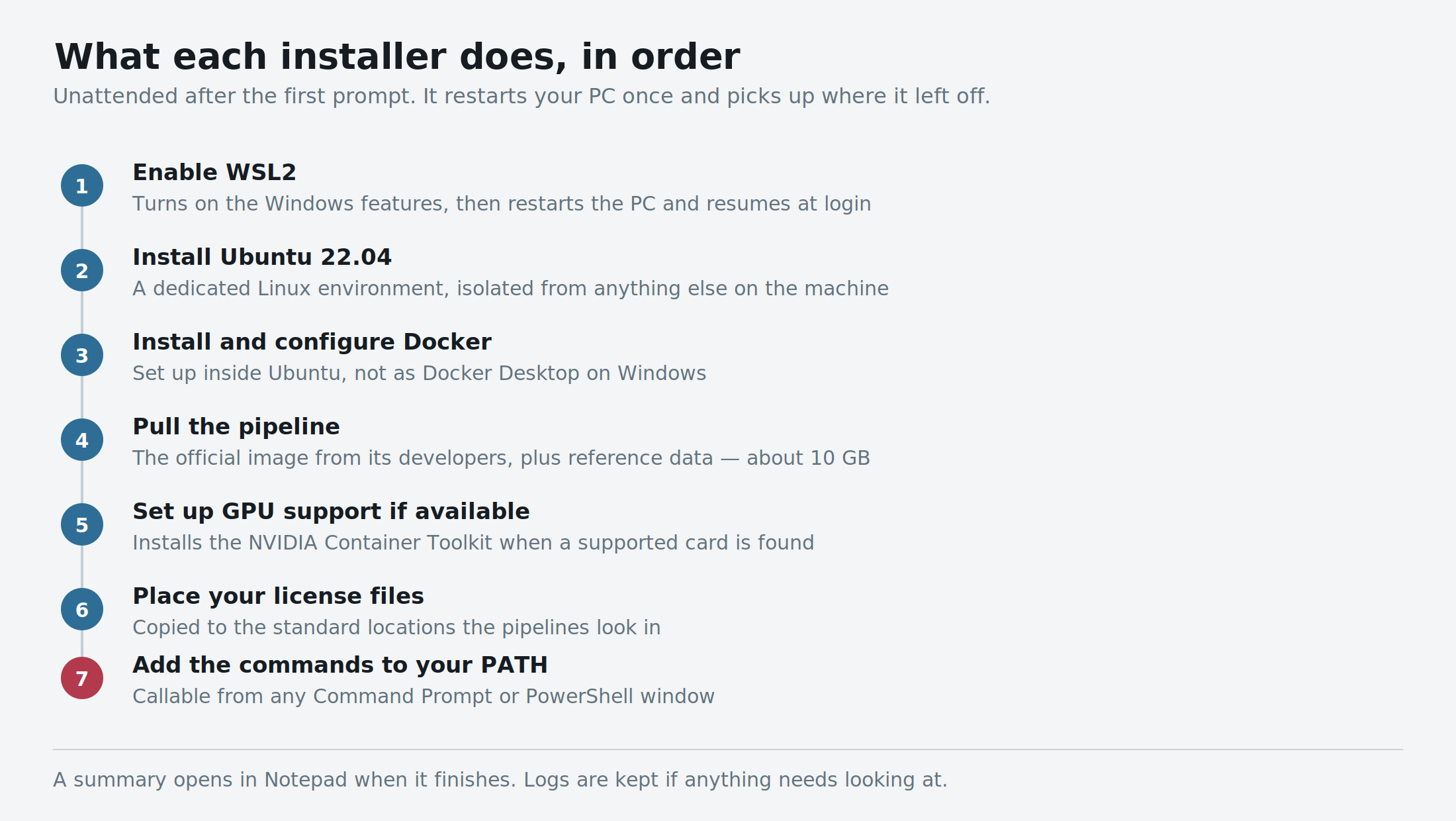
Each is a small signed setup program that builds a complete Linux container environment on a PC and then gets out of the way.
Nothing scientific runs natively on Windows. The wrapper commands handle container invocation, path translation, and volume mounts, so from the user side it behaves like an ordinary Windows program.
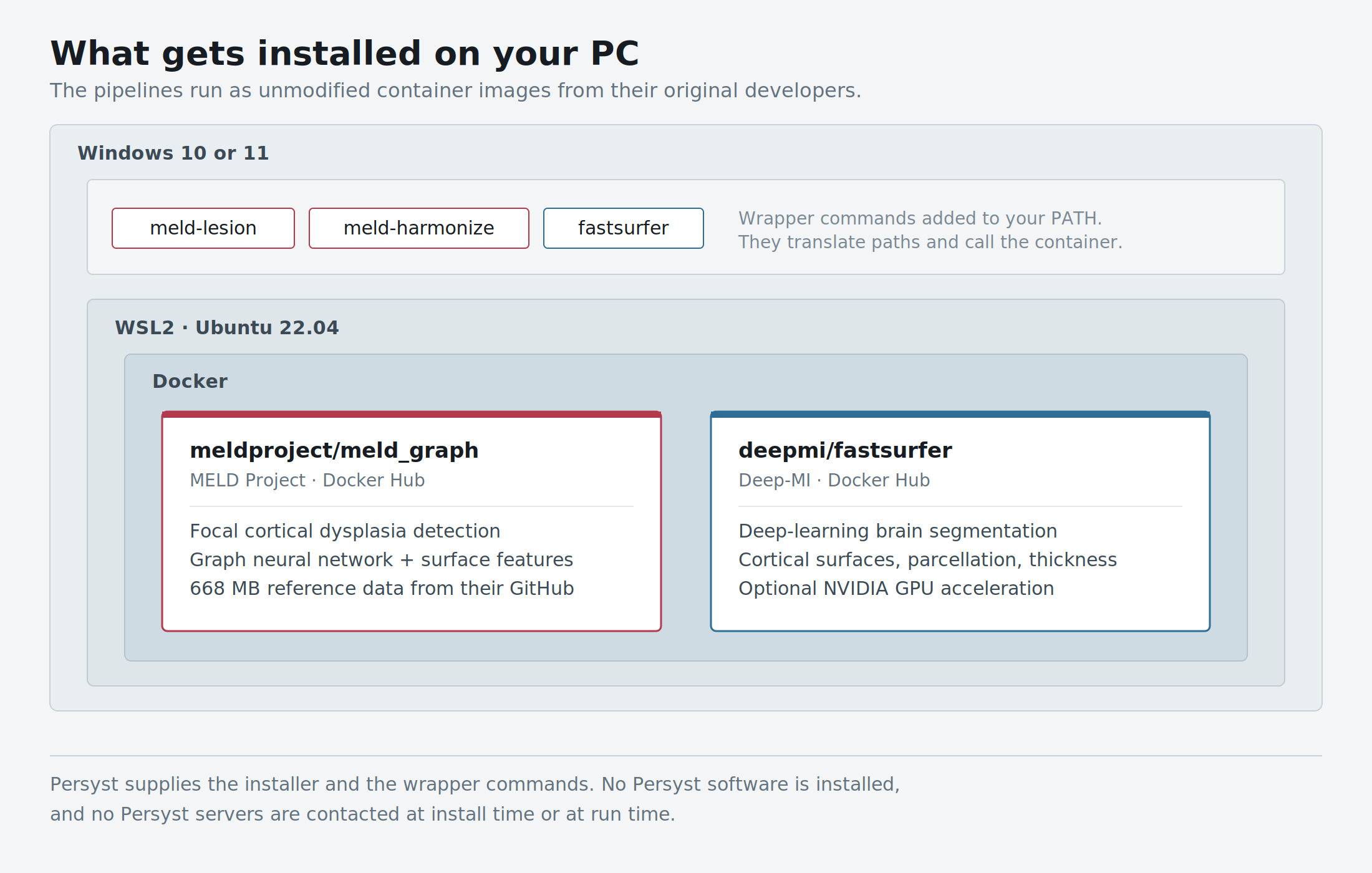
The pipelines are unmodified upstream software. The installers pull the official published images directly from their developers — meldproject/meld_graph from the MELD Project and deepmi/fastsurfer from Deep-MI — and MELD’s reference data from the MELD Project’s own GitHub releases. These are convenience installers, not forks or lepackaged copies.
Persyst supplies the installer and the wrapper commands. No Persyst software is installed and no Persyst servers are contacted at install time or at run time.
What you’ll need
| FastSurfer | MELD | |
|---|---|---|
| Windows | 10 (2004+) or 11 | 10 (2004+) or 11 |
| RAM | 8 GB min, 16 GB recommended | 8 GB min, 16 GB recommended |
| Free disk space | 60 GB | 60 GB |
| Admin rights | Required | Required |
| Downloaded during install | ~10 GB | ~10 GB |
| FreeSurfer license | Optional; only for the full pipeline | Required — free registration |
| MELD license | Not applicable | Required — from the MELD Project |
A GPU is optional. Both run on CPU, just more slowly. If installing inside a virtual machine, nested virtualisation must be enabled on the host first or setup will fail; the installer guides cover Hyper-V, VMware, and VirtualBox.
Downloads
Each download is a zip file containing the signed installer and all relevant guides. Right-click the installer inside the zip and choose Run as administrator. Both installers are digitally signed by Persyst Development LLC — you can confirm this under Properties → Digital Signatures before running.
FastSurfer & FreeSurfer for Windows
FastSurfer-Setup.zip
Contains: FastSurfer-Setup.exe · Installer Guide · User Guide
Includes FreeSurfer, used by the full surface pipeline (free FreeSurfer license required — see above).
MELD Lesion Pipeline for Windows
MELD-Setup.zip
Contains: MELD-Setup.exe · Installer Guide · User Guide · Scanner Harmonisation Guide
For the installation of both, start with MELD. It places the FreeSurfer license in the shared default location FastSurfer also uses, and absorbs the one-time WSL2 setup and restart. Then run the FastSurfer installer.
Intended use and important cautions
These are research tools. They are not medical devices. Neither has been cleared or approved by any regulatory authority, including but not limited to the U.S. Food and Drug Administration, and neither is CE-marked under the European Union Medical Device Regulation. They are not intended for primary diagnosis or to direct clinical care. All output must be reviewed and interpreted by a qualified professional in the full clinical context, and must not be the sole basis for any clinical decision.
Additional cautions for MELD. MELD aids the detection of focal cortical dysplasia. Its output is a set of candidate regions, not a diagnosis, and both false positives and false negatives occur. It is intended for patients with focal epilepsy in whom a focal cortical dysplasia is suspected, and is not appropriate for patients with tuberous sclerosis, suspected hippocampal sclerosis, hypothalamic hamartoma, periventricular nodular heterotopia, other focal epilepsy pathologies, or previous resection cavities.
Guidance on reading MELD reports: meld-graph.readthedocs.io.
Credits and citations
The Windows installers and command-line wrappers are provided by Persyst Development LLC free of charge for research use. Persyst did not develop MELD, FastSurfer, or FreeSurfer, and neither pipeline is a Persyst product. Each component remains subject to its own license terms.
MELD Graph — developed by the MELD Project, led by Dr Konrad Wagstyl and Dr Sophie Adler. Source: github.com/MELDProject/meld_graph
Ripart M, Spitzer H, Williams LZJ, Walger L, Chen A, Napolitano A, et al. Detection of Epileptogenic Focal Cortical Dysplasia Using Graph Neural Networks: A MELD Study. JAMA Neurology. 2025;82(4):397–406.
FastSurfer — developed by the Deep Medical Imaging Lab (Deep-MI). Henschel L, Conjeti S, Estrada S, Diers K, Fischl B, Reuter M. FastSurfer — A fast and accurate deep learning based neuroimaging pipeline. NeuroImage. 2020;219:117012.
FreeSurfer — Laboratory for Computational Neuroimaging, Athinoula A. Martinos Center for Biomedical Imaging. Please check each project’s own site for the current recommended citation and full author list.